A 3° descent angle in a clean CRJ200 at 210kts is very near idle thrust. If we wish to slow down after having already intercepted the glideslope, we will need to employ additional methods.
My technique:
While intercepting the glideslope from above is bad practice, APR mode will do it.
In the moment, you will pull the throttles to idle and select full flight spoilers only to be rewarded with a tiny trickle on the speed trend indicator. Leaving the security of the glideslope is uncomfortable so you reluctantly select vertical speed and scroll from from -1100fpm to maybe -800fpm, the bare minimum to get a deceleration. Yet in my method, I go straight to -100fpm.
Time for math.
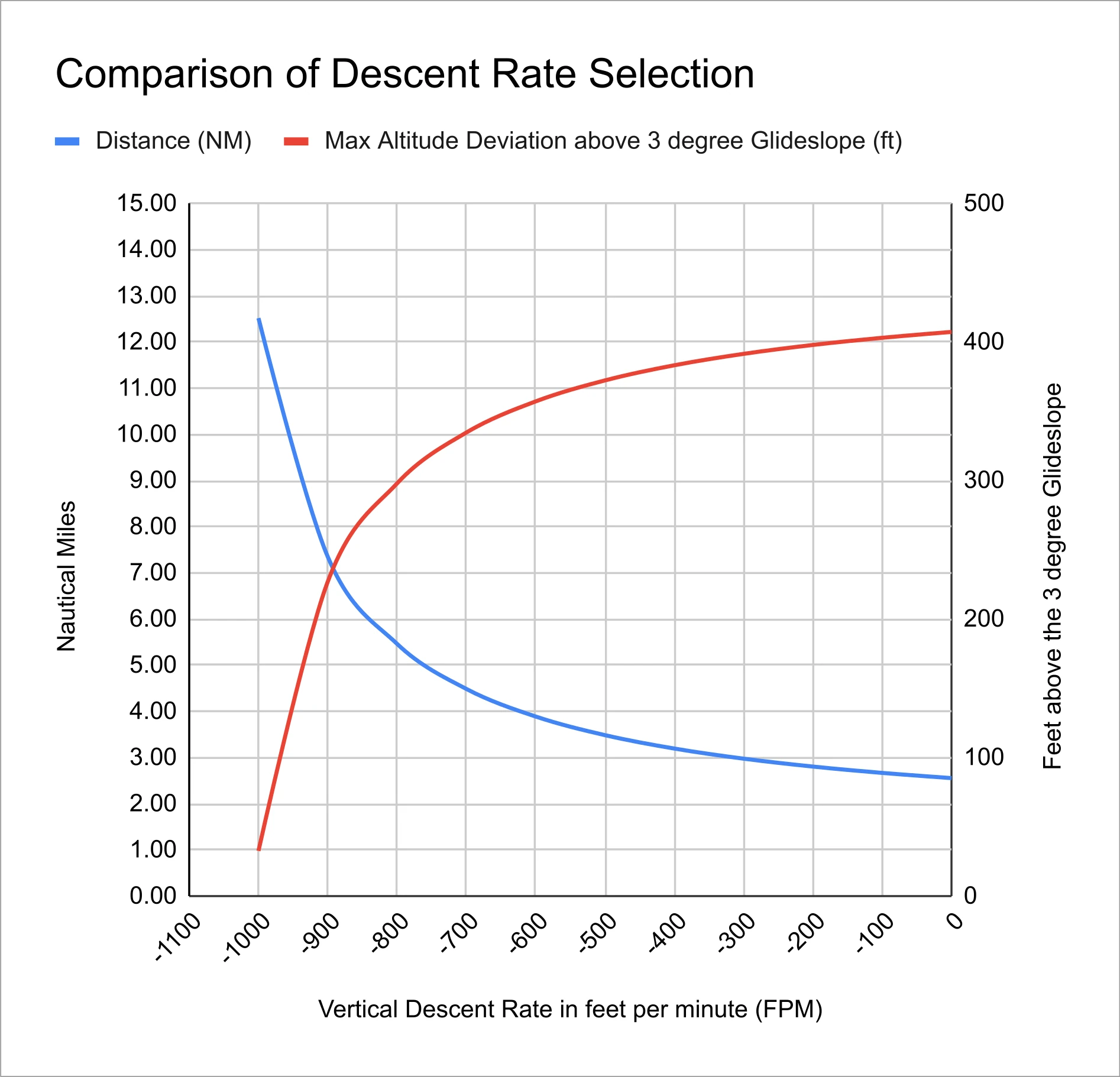
Here is a chart I made. The X axis is the range of descent rates we may pick from -1000fpm to 0fpm. The left Y axis shows the number of nautical miles the entire maneuver will require, from departing the glideslope to slowing, descending, and recapturing. The right Y axis shows the maximum altitude deviation in feet our manuever will take us above the 3° glideslope.
It looks like a descent rate anywhere from -0 to -400fpm will keep the maneuver within 3NM. The deviation is about 400ft, which really is not too bad.
Selecting a descent rate in the -600 to -800fpm range might feel more comfortable, but the manuever will take almost twice as far to complete. The distance above the glideslope will not be much improved at 300' vs 400' anyways.