Many people I fly with try to minimize brake temperatures as much as possible. Taking the aircraft from an inbound crew, someone might see our brake temperature indicator and say, "Wow they really cooked the brakes". The engineer in me has always wondered if it really matters. The only requirement for my aircraft is that our brake temperatures be less than 230°C prior to takeoff. (Indicated by green values of no greater than 6 on a scale of 0-20.) In practice, I've never delayed a takeoff due to high brake temperatures. I can't recall if I've ever even seen higher than a 6.
Last week, I had the perfect opportunity to collect some data. Our brakes were particularly hot after taxi into the gate, followed by a long break. I set my phone on the center pedestal and video recorded the brake temperatures as they came down.
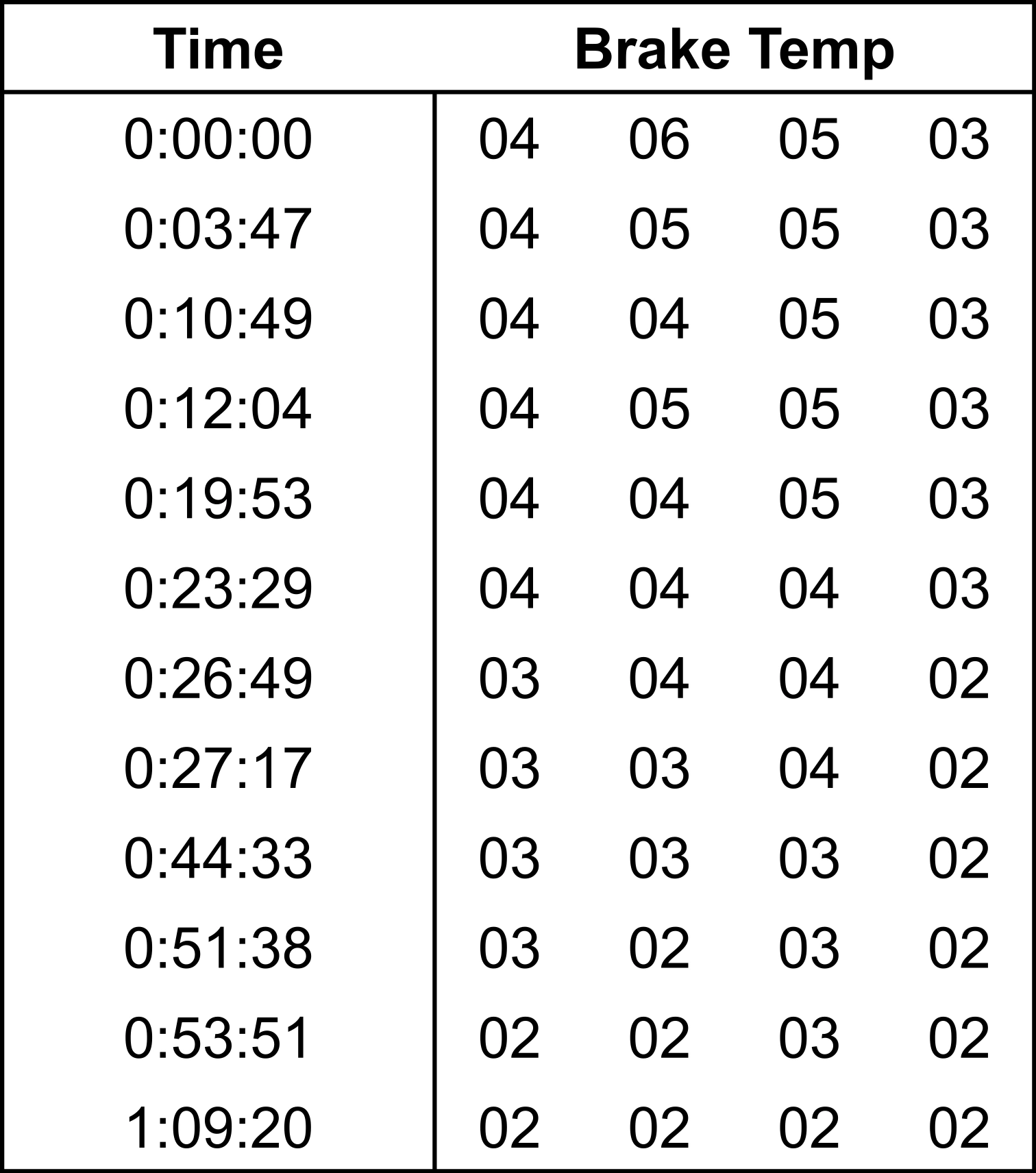
This data recording began immediately after block-in with the parking brake off. The ambient temperature was about 12°C.
The following table is the progress of the BTMS values trickling down over the course of over an hour.
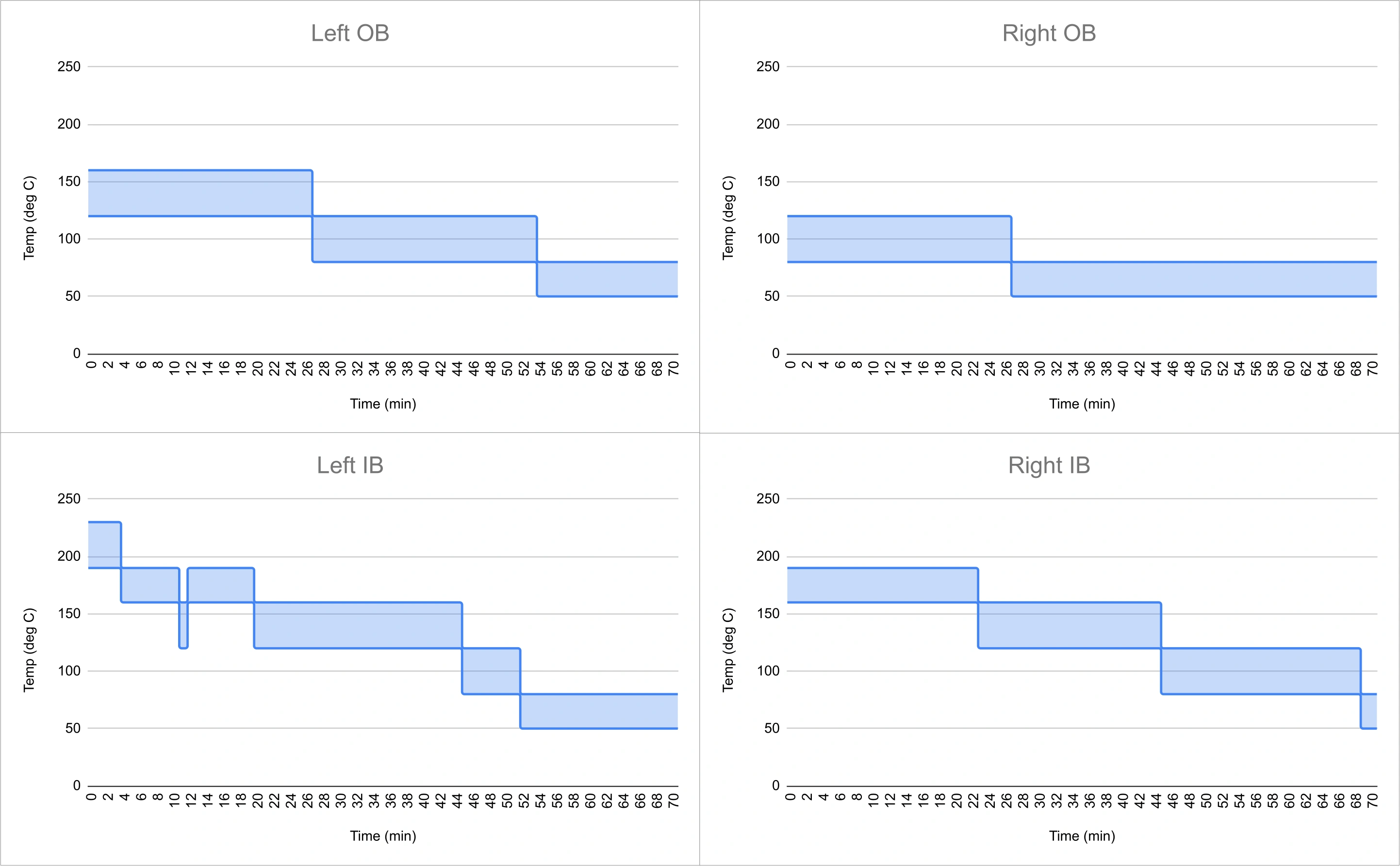
The following is a chart of each of the four brake temperatures from the table above; OB for outboard and IB for inboard. The blue bands show the temperature range indicated by the BTMS values.
Newton's law of cooling can be expressed in the following equation:
$$T_t=(T_0 - T_\text{ambient})e^{-k t} + T_\text{ambient}$$
where \(T_t\) is the temperature of the object at a given time,
\(T_0\) is the initial temperature of the object,
\(T_\text{ambient}\) is the ambient temperature of the environment,
\(k\) is a constant (which we must find),
and \(t\) is time.
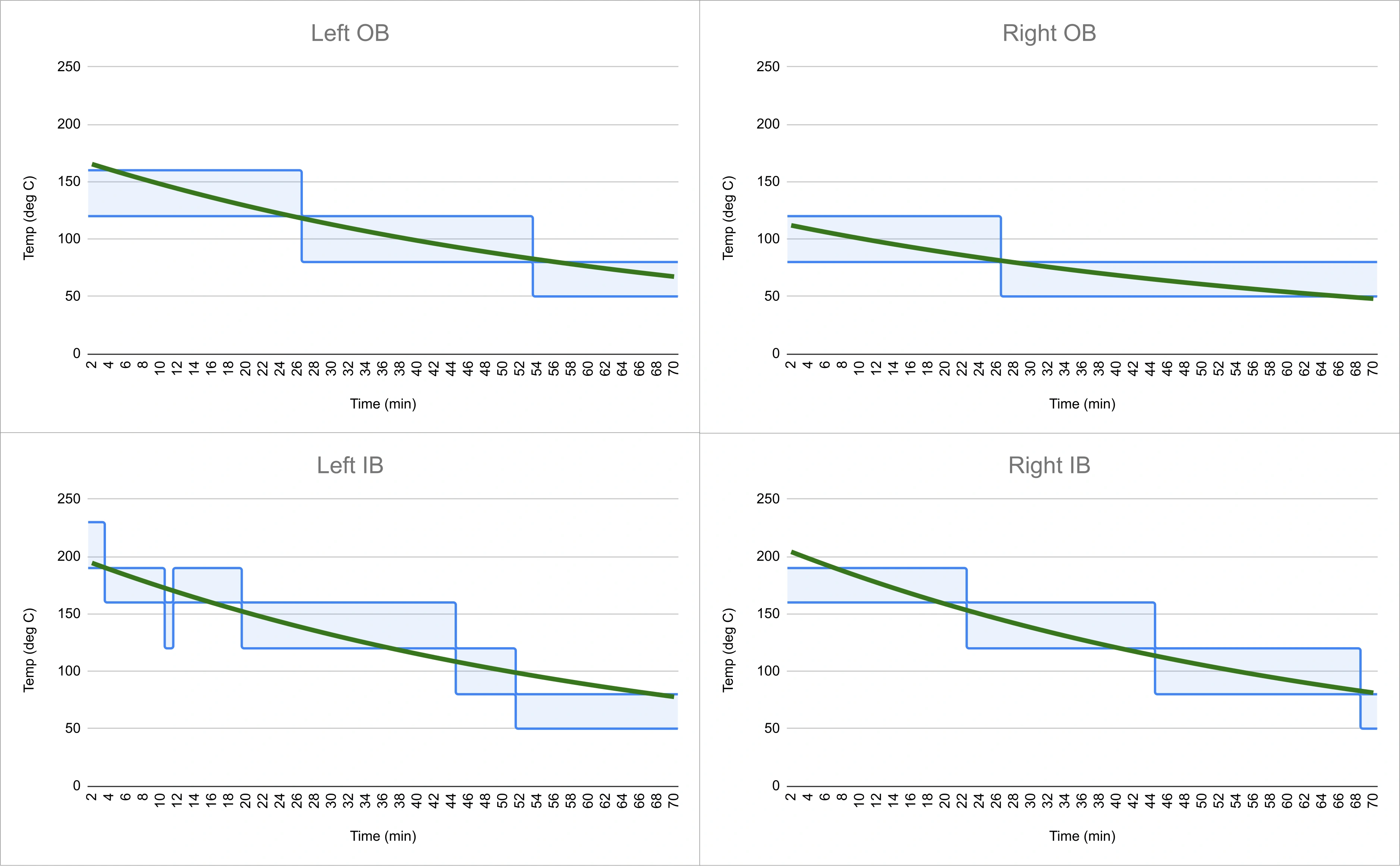
It took some time playing with the curve fit tool, but I eventually settled on a \(k\) value of 0.015.
The model for this particular day is as follows: $$T_t=(T_0 - 12^\circ)e^{-0.015t} + 12^\circ$$
I also had to pick a starting temperature for each brake. From left OB to right OB, I chose values of 170, 200, 210, 115°C.
Here are the following plots:
What's neat about Newton's Law of Cooling, is that once \(k\) is determined, you can estimate how long an object will take to cool for any ambient temperature.
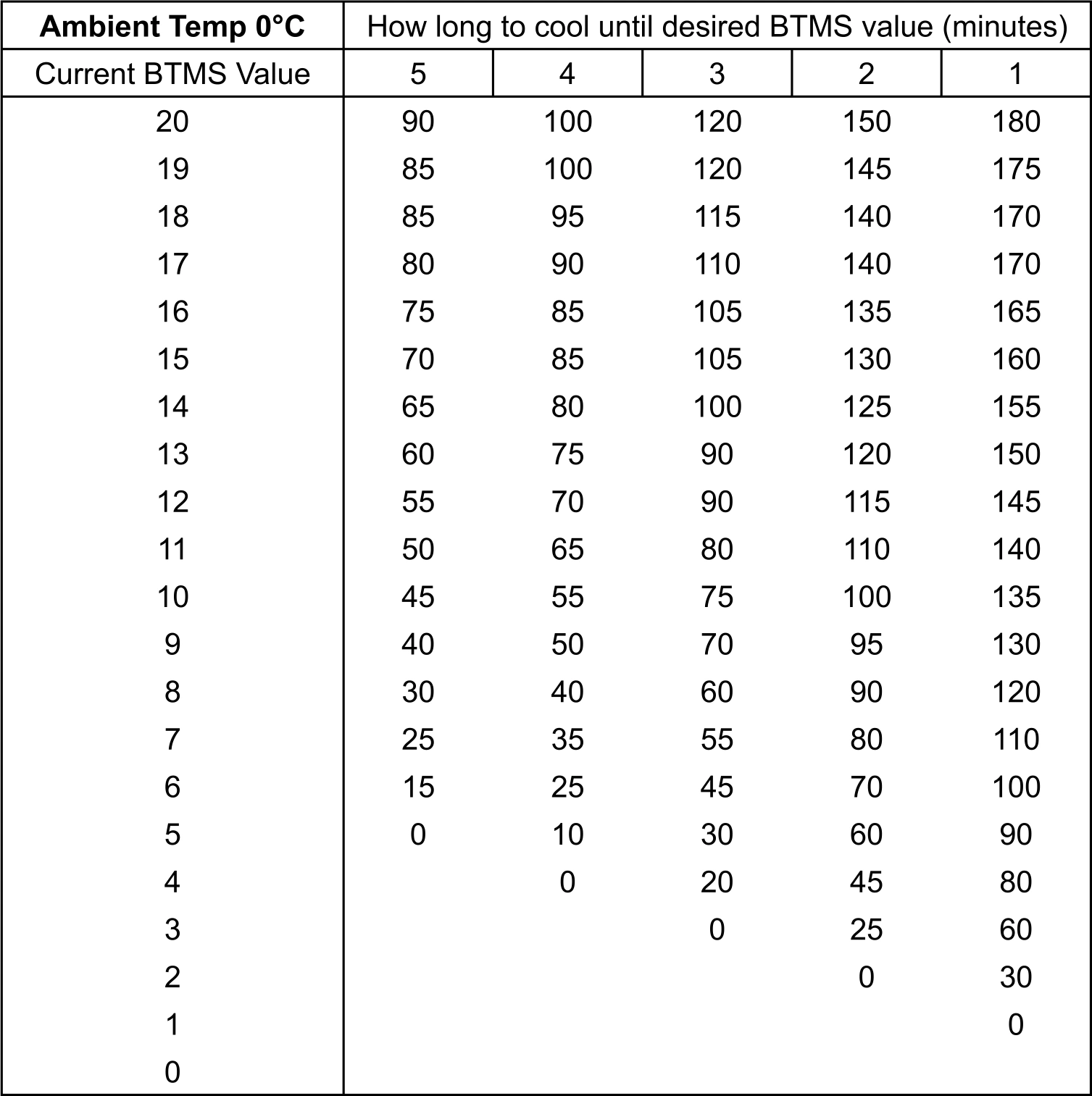
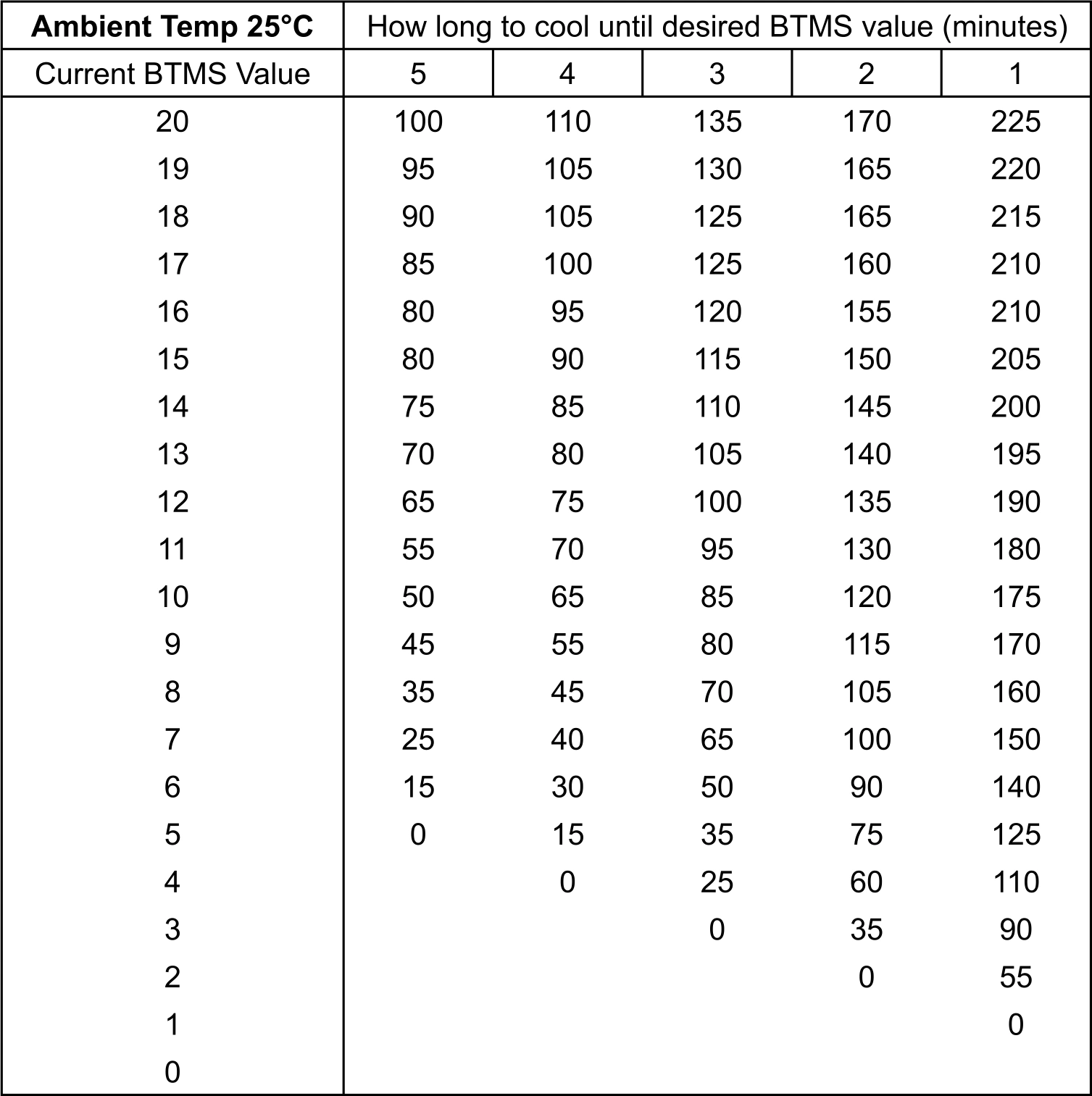
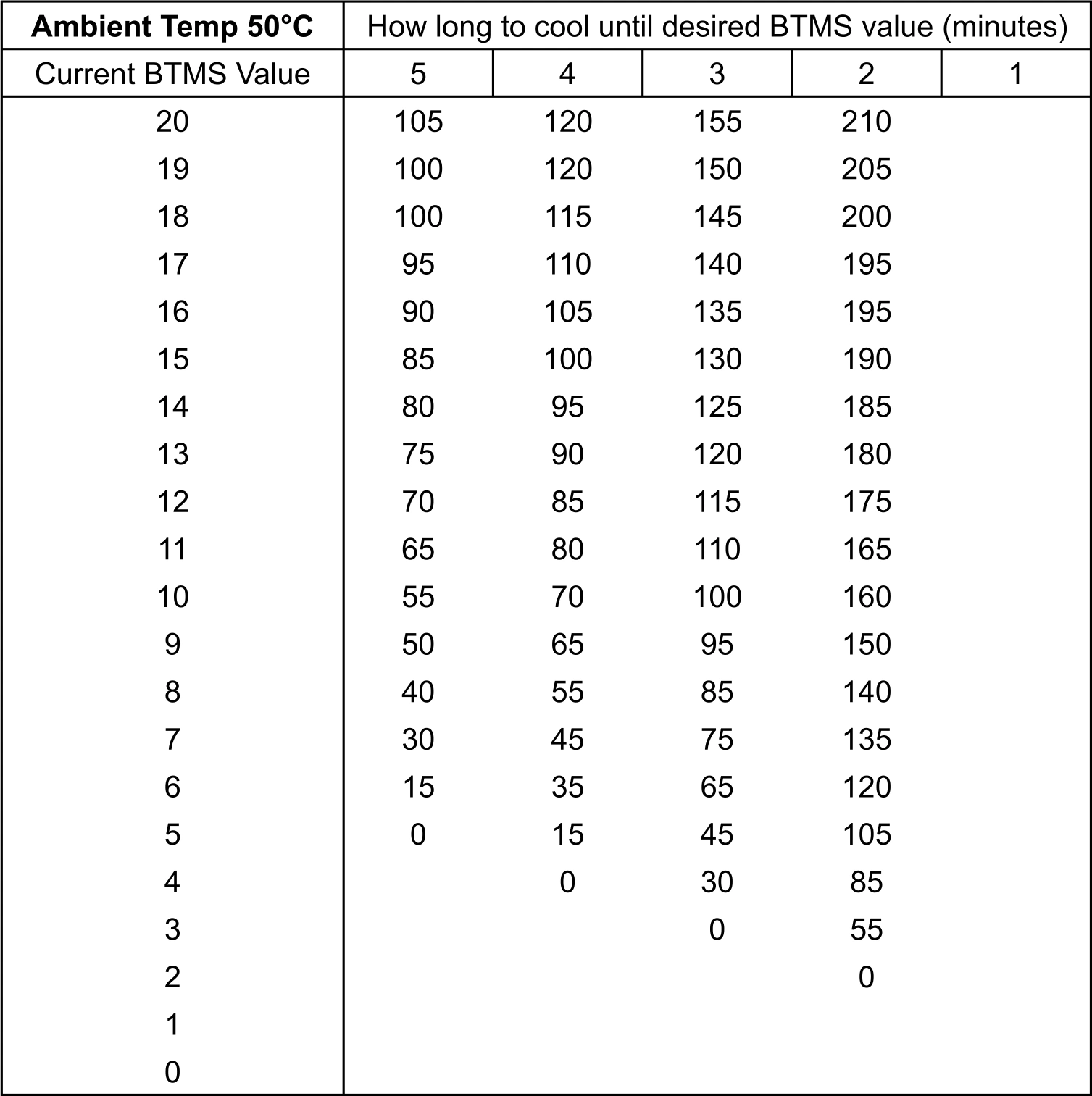
Here are some cooling tables I made with the model.
What I want to know is, how hot can I get the brakes on landing and taxi-in, before it becomes a problem for the next flight.
For takeoff, the BTMS must 6 or less. We may experience a brake temperature rise during taxi out, so we should plan on a BTMS of no greater than 5 for pushback from the gate.
In a CRJ700, the fastest deplaning, cleaning, and boarding we can expect to achieve is about 30 minutes.
Referencing the cooling table for ambient temperatures of 0°C, you could get the brakes all the way up to 8, and still cool to a 5 in 30 minutes.
On a 25°C day, the brakes will take longer to cool, maybe a BTMS value of 7 is as high as you could go.
With ambient temperatures of 50°C (thats 122°F, a hot day in Phoenix, Arizona), you are still probably fine with BTMS values of 7.
These charts confirm my initial hunch that brake temperatures aren't the biggest thing to stress about during normal operations. It would take excessive brake temperatures during the landing and taxi-in order to produce a brake so hot, the next flight would have to delay takeoff.
Keep in mind this data was collected with the parking brake off. If you begin the taxi and then realize the brakes are too hot, you can expect them to take longer to cool with the parking brake on.