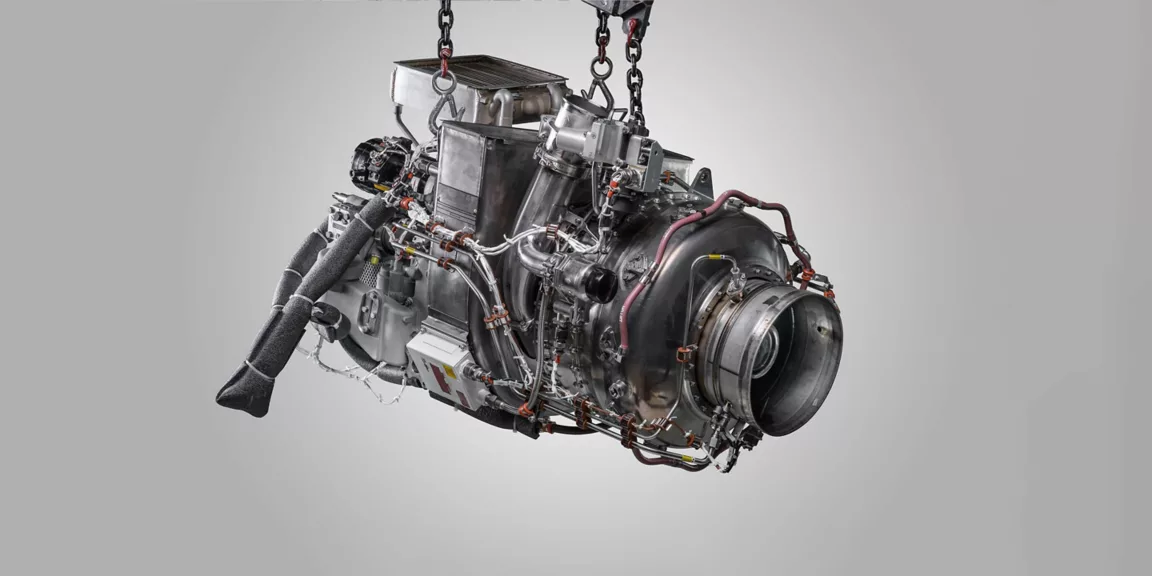
The Honeywell RE220 used on the CRJ550/700/900
Operating a jet airliner, the systems are so much more complicated beyond a simple GA trainer. Knowing what to do follows a hierarchy of manufacturer's procedures, company procedures, memos, emails, tribal knowledge, suspicions, rumours, hunches, guesses, and spell castings.
The following is an overview of my studies to better understand the why behind how we operate the APU.
The Honeywell RE220 used on the CRJ550/700/900

The Garret GTCP (now Honeywell) 36-150 series used on the CRJ200.
The APU is a turboshaft generator compared to the turbojet or turbofan format of the engines. The engines produce mostly thrust, but also compressed air and shaft power for electricity, pumps, etc... In a turbojet, the turbine section extracts just barely enough energy from the hot exhaust gases to power the compressor section and the accessory gearbox. The designers wish to pass through as much energy as possible to the exhaust pipe to produce the most thrust.
How much thrust does the APU produce?
Basically none. A turbine generator produces almost no thrust from it's exhaust gases, the designers wish to extract all the energy from the hot exhaust gases to power the main shaft. It is impossible however to extract so much energy, the exhaust airflow comes to a stop. Plus it's beneficial to blow the exhaust out and away from the aircraft.
Does the APU have a throttle?
The APU is managed by the Electronic Control Unit (ECU). The ECU manages the fuel flow to the APU and maintains a constant RPM over all operating conditions.
Turbine engines are generally more efficient at higher RPMs and each engine has a design RPM for optimal operation. For engines,we require large swings of thrust from idle to take off thrust to cruise and back to idle again. These off-optimal speeds are inefficient and large, transient forces occur with every change causing stress in the engine. Because he APU is used only for compressed air and electricity, it operates at a fixed speed for optimal efficiency.
There is another benefit to constant speed. Electrical generators also require near constant RPMs to function. This eliminates the need for a constant speed drive between the APU accessory gear box and the generator like installed on the engines.
If RPM is constant, what happens in the APU when loads are increased?
Upon initial startup, the AC generator can be loaded onto the APU right away as it does not cause a significant load.
When the bleed system is opened to power the air conditioning, it is as if a gaping hole has just appeared in the compressor section of the APU. As the turbine section gasps for air, the ECU anticipates a drop in RPM and compensates by pumping in more fuel. From the cockpit, I observe a spike in EGT. From the ramp, apparently flames can be observed from time to time out a CRJ200's exhaust pipe.
As airflow is restored, the EGT spike ends and the APU stabilizes at an elevated fuel flow and temperature.
I allow a 2 minute warm-up period from APU start and bleed usage. After a turbine engine starts, there are relatively hotter and cooler spots in the engine. The warmup period allows the temperatures of the engine components to soak through and even out. This reduces the wear endured during the EGT spike when the bleed valve is opened.
It makes sense that the APU should get a cool down period too. Turning the bleeds off and letting the APU run at idle for 1-2 minutes reduces wear. Some aircraft APU have a built-in cool down cycle that manages the delayed shut down on it's own.
Shutting the APU down and restarting it later puts the engine through a whole cycle of speed and temperature transients. It might be less wear to just leave it running, even if it burns fuel and oil.
I don't know when the break even point is. The people who own my airplane and pay for fuel request that APU use be minimized. I will operate it as they ask. Additionally, the APU is loud and the airport and it's neighbors appreciate it's silence.
Personally I don't like working hard either, but running the air conditioning is what the APU is for. We could always look for ways to reduce the temperature however.
On days when the weather is moderate, it may be possible to keep a comfortable cabin temperature using only one air conditioning PACK. I have observed about half the increase in EGT versus running two PACKs on a CRJ700.
This may not work on all aircraft. The writers at The Boeing 737 Technical Website have observed that single pack use causes higher APU temperatures on 737's.
The APU exhaust is an open tailpipe, but the APU intake has a door. This door opens and closes depending on whether the APU is operating. It will be found in the full open position while operating the APU on the ground. Operating the APU in flight, the door may adjust to an intermediate position.
If the door actuator is broken, it can be deferred in the open position. This exposes the APU to the elements of precipitation, high air speeds, and deicing fluid, but it at least allows us to use the APU.
I have flown CRJ700s in this condition a number of times. There is a speed limit of 220 kts with the APU door open and the APU off. Nobody wants to fly around speed limited at 220 kts so the solution is to run the APU the entire flight and burn a little more gas.
Recently, I've flown a couple of CRJ200s with the door deferred open as well. The CRJ200 door open speed limit with the APU off is 300kts. 300kts is significantly faster than 220kts. The dispatch release has the remark, "fuel burn planned for APU off", so it seems appropriate to fly with the APU off. The outcomes have been mixed.
Before going further, it's important to note we prefer to start a CRJ200's APU in flight during descent. We turn on the APU to power the pressurization and air conditioning system, allowing the engines bleeds to focus their efforts on the wing anti-ice and go-around performance.
During my first CRJ200 flight with this deferral, I reach up and press PWR/FUEL and START as normal during descent through 10,000' and 250kts and was greeted by the APU FAULT caution message.
A few weeks later, new airplane, new captain, same deferral. I suggest we leave the APU on this time, but they want to try it off. It worked out okay; the APU started on 2 out of 3 attempts.
When the PWR/FUEL push button is selected, power and fuel are provided to the APU and it's ECU. When the ECU comes to life, it performs a mini self test and verifies the APU rpm is less than 7%. Upon completion of this pre-test, it next performs an APU test, annunciated by the APU IN BITE status message. The APU IN BITE test verifies the operation of things such as pressure/temperature sensors, valve motors, etc... Uncommon knowledge, there are TWO tests. First an unanunciated test of the ECU and RPM verification, THEN the main test signified by the status message.
After flying around for an hour between 250 and 300kts, I suspect our APU was windmilling above 7%, preventing the ECU from running the APU IN BITE test.
APU fuel burn is negligible considering a short one hour flight typical of a CRJ200. If it had been summer, we would've wanted that APU working by the time we got on the ground. In icing conditions, we would've really wanted it. Consider the increased operational cost and delay because the aircraft will now be written up for maintenance.